
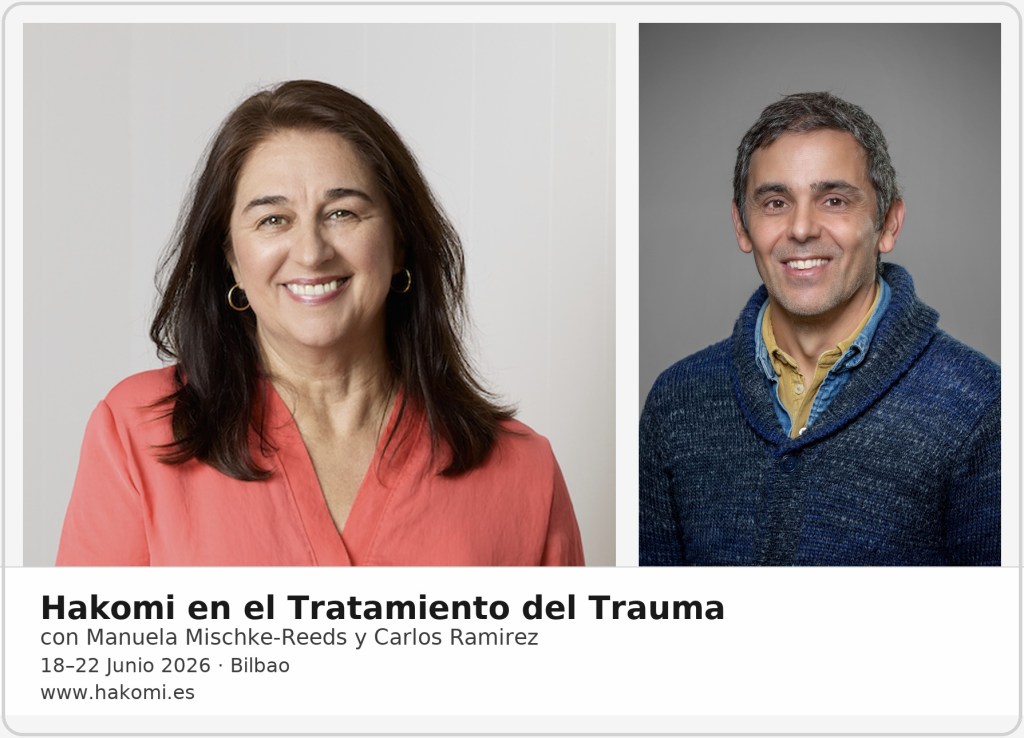
With Manuela Mischke-Reeds (international faculty, Hakomi Institute) and Carlos Ramírez García (lead trainer in Bilbao).
- Location: Bilbao
- Dates: June 18–22, 2026
- Format: In person, experiential, and practice-based
Module description
Hakomi is particularly well suited for trauma work thanks to its gentle, non-invasive methodology, its emphasis on body-centered awareness, and its attuned relational stance. Rather than overriding defensive responses, the method works respectfully with protective adaptations, allowing traumatic material to emerge and integrate at a pace the nervous system can tolerate.
In this special module, we welcome Manuela Mischke-Reeds as a guest international trainer from the Hakomi Institute, together with Carlos Ramírez García, lead trainer in Bilbao.
Manuela is widely recognized for her work in somatic psychotherapy, trauma-sensitive movement, and the ISITTA approach (Innate Somatic Intelligence™ Trauma Therapy Approach). In dialogue with the Hakomi method, this training examines protective adaptations to trauma, including how character patterns can serve as an organizing lens, and bridges Hakomi principles with contemporary trauma science, nervous system research, and applied somatic sequencing.
Who is this for?
- Professionals in psychology, psychiatry, psychotherapy, medicine, and mental health nursing
- Body-oriented therapists and somatic practitioners
- Hakomi students or practitioners seeking to deepen trauma-informed clinical skills
This is not a personal therapy workshop, although the learning is experiential. Participation requires a prior interview.
What you will learn
We will explore—applied and clinically grounded—how to hold trauma processes from a Hakomi perspective, integrating:
- A trauma-informed understanding of nervous system regulation (polyvagal theory, orienting response, implicit memory, defensive sequencing)
- Tracking somatic indicators of safety, activation, collapse, dissociation, and relational rupture
- Mindfulness as a titrated, trauma-sensitive intervention
- Resourcing and pendulation within Hakomi’s relational and experimental framework
- Differentiating traumatic shock, developmental trauma, attachment trauma, and adaptations to chronic stress
- Understanding protective adaptations, including character strategies as responses to early relational environments
- Supporting the completion of defensive responses without overwhelming the system
- Working with states of freeze, submission, and collapse through precise somatic micro-interventions
- Contact statements and Hakomi experiments adapted to a trauma-sensitive pace
- The use of self by the therapist: regulation, tracking, boundaries, ethical discernment, and relational presence
- Considerations regarding cultural and intergenerational trauma within a Hakomi-oriented clinical framework
Training format
An intensive, highly practical structure that combines:
- A clear theoretical frame without cognitive overload
- Live clinical demonstrations
- Practice in pairs and small groups with supervision
- Integration of somatic tools into clinical dialogue
- Ethical reflection and professional self-care
Clinical integration: what you will apply in practice
- A clear clinical map to assess safety, stabilization, and readiness for trauma processing
- Practical somatic interventions to support regulation and the activation of resources
- Greater precision when working with triggers, high activation, freeze, dissociation, and relational activation
- Improved clinical decision-making in complex or multi-layered trauma processes
- A style of relational, body-based, mindfulness-informed intervention, rooted in attuned presence
About Manuela Mischke-Reeds


Manuela Mischke-Reeds, MA, MFT, is a somatic psychotherapist, Hakomi trainer, author, and internationally recognized teacher specializing in trauma, stress, and embodied resilience. With more than twenty-five years of clinical experience, she integrates somatic psychology, mindfulness, and movement as pathways for healing and transformation.She is a cofounder of the Hakomi Institute of California and a core faculty member of the Hakomi Institute. She founded Embodywise,
an international training organization offering professional education in trauma and somatic psychology, and developed ISITTA (Innate Somatic Intelligence Trauma Therapy Approach), an advanced trauma training program grounded in Hakomi principles.
She is the author of Embodied Psychedelic Therapy: A Somatic Guide (W. W. Norton, 2025),
Trauma-Sensitive Movement (2025), Somatic Psychotherapy Toolbox (PESI, 2019), and
8 Keys to Practicing Mindfulness (W. W. Norton, 2015). Through her teaching and writing, she supports professionals in cultivating embodied presence, clinical precision, and trauma-informed practice.
About Carlos Ramírez García
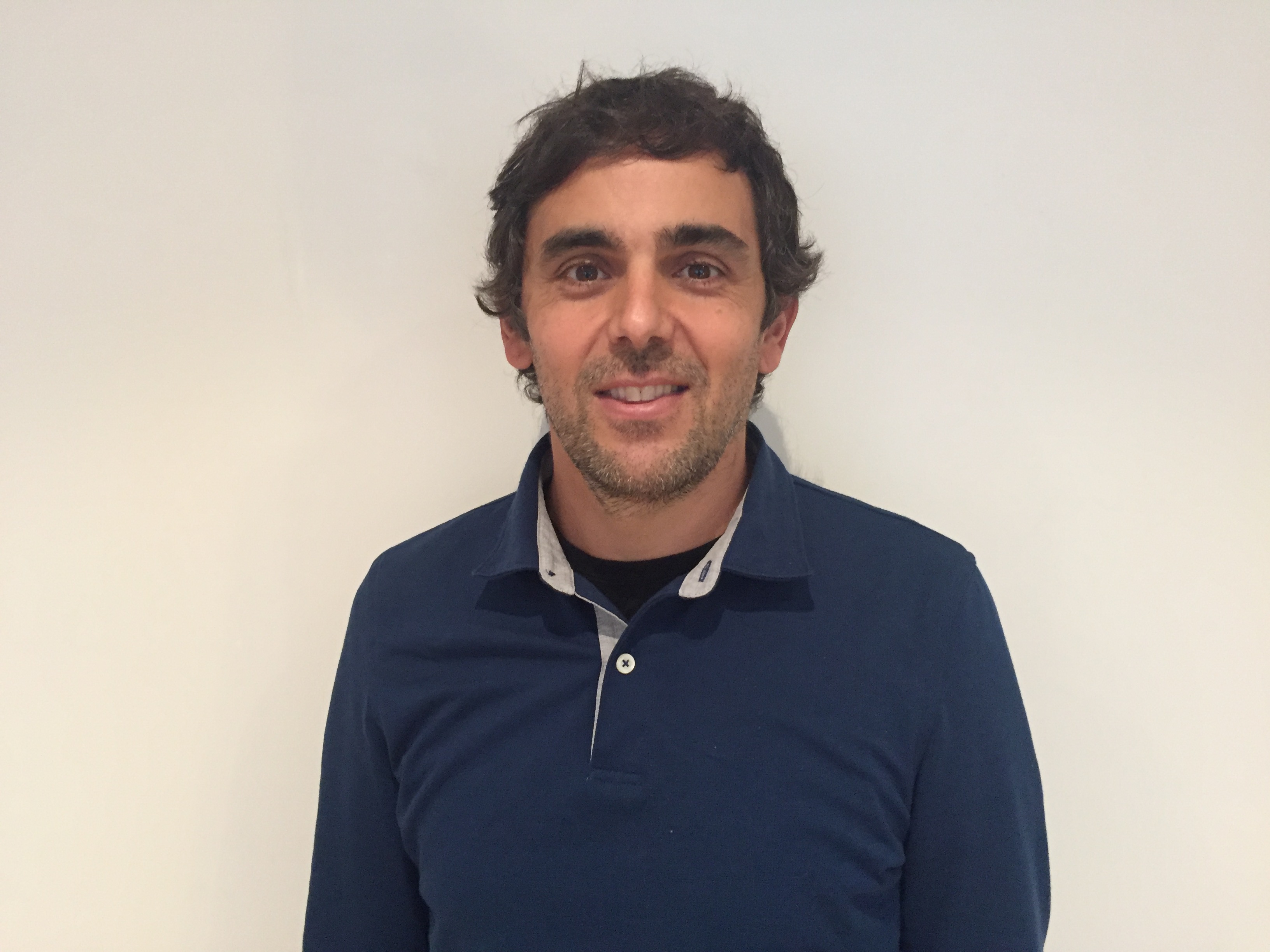
Carlos Ramírez García is a psychologist and psychotherapist in Bilbao. After his training in Psychology, he has focused especially on psychotherapy and on the embodied dimension of experience: somatic symptoms, distress, tension and anxiety, and how lived experience is expressed through the body. His “toolbox” integrates primarily the Hakomi Method (mindfulness-based), Psychodrama, and the ethics-and-power model Right Use of Power, alongside other
learning from systemic, psychodynamic, cognitive approaches, trauma work, and neurobiology. He has worked in psychosocial settings, addictions, social services, and psychiatry, and since 2007 has been in private practice as a psychologist, psychotherapist, and trainer.
Fees
- Early-bird fee: €620 (until one month before the module begins)
- Standard fee (after early bird): €660
Dates and schedule
June 18–22, 2026 (Bilbao).
- Thursday
- Morning: 9:00–13:30 Afternoon: 15:00–16:30
Friday
- Morning: 9:00–13:30 Afternoon: 15:00–16:30
Saturday
- Morning: 9:00–13:30 Afternoon: 15:00–18:00
Sunday
- Morning: 9:00–13:30 Afternoon: 15:00–17:30
Monday
- Morning: 9:00–13:30 Afternoon: 15:00–16:30
Venue
Sala Jania – c/ Costa, 8, 4º izq (48010) Bilbao
Registration & information
Limited places.
- Phone / WhatsApp: +34 665 702 282
- Email: info@hakomi.es
- Website: hakomi.es
➡️ To reserve your place, please write to us including: name and profession.
Frequently asked questions
Is this a practical training?
Yes. The module is in person and experiential, with live demonstrations and supervised practice.
Do I need prior Hakomi training?
It is oriented toward mental health professionals and people training in Hakomi. There is a reduced fee for those who have completed the Hakomi basic training (45 days).
Is this a personal therapy workshop?
No. Although the learning is experiential, it is not a personal therapy workshop. Participation requires a prior interview.
{
«@context»: «https://schema.org»,
«@type»: «Event»,
«name»: «Hakomi in Trauma Treatment | June 18–22, 2026»,
«eventAttendanceMode»: «https://schema.org/OfflineEventAttendanceMode»,
«eventStatus»: «https://schema.org/EventScheduled»,
«startDate»: «2026-06-18»,
«endDate»: «2026-06-22»,
«location»: {
«@type»: «Place»,
«name»: «Sala Jania»,
«address»: {
«@type»: «PostalAddress»,
«streetAddress»: «c/ Costa, 8, 4º izq»,
«postalCode»: «48010»,
«addressLocality»: «Bilbao»,
«addressCountry»: «ES»
}
},
«description»: «In-person, experiential training to integrate the Hakomi Method into clinical work with psychological trauma, relational trauma, and chronic stress, using mindfulness, nervous system regulation, and relational attunement. With Manuela Mischke-Reeds and Carlos Ramírez García.»,
«organizer»: {
«@type»: «Organization»,
«name»: «Hakomi Spain»,
«url»: «https://hakomi.es/»
},
«performer»: [
{ «@type»: «Person», «name»: «Manuela Mischke-Reeds» },
{ «@type»: «Person», «name»: «Carlos Ramírez García» }
],
«offers»: [
{ «@type»: «Offer», «price»: «620», «priceCurrency»: «EUR», «availability»: «https://schema.org/InStock», «category»: «Early bird» },
{ «@type»: «Offer», «price»: «660», «priceCurrency»: «EUR», «availability»: «https://schema.org/InStock», «category»: «Standard» },
{ «@type»: «Offer», «price»: «330», «priceCurrency»: «EUR», «availability»: «https://schema.org/InStock», «category»: «Reduced fee (Hakomi basic training 45 days)» }
]
}
 Método Hakomi